
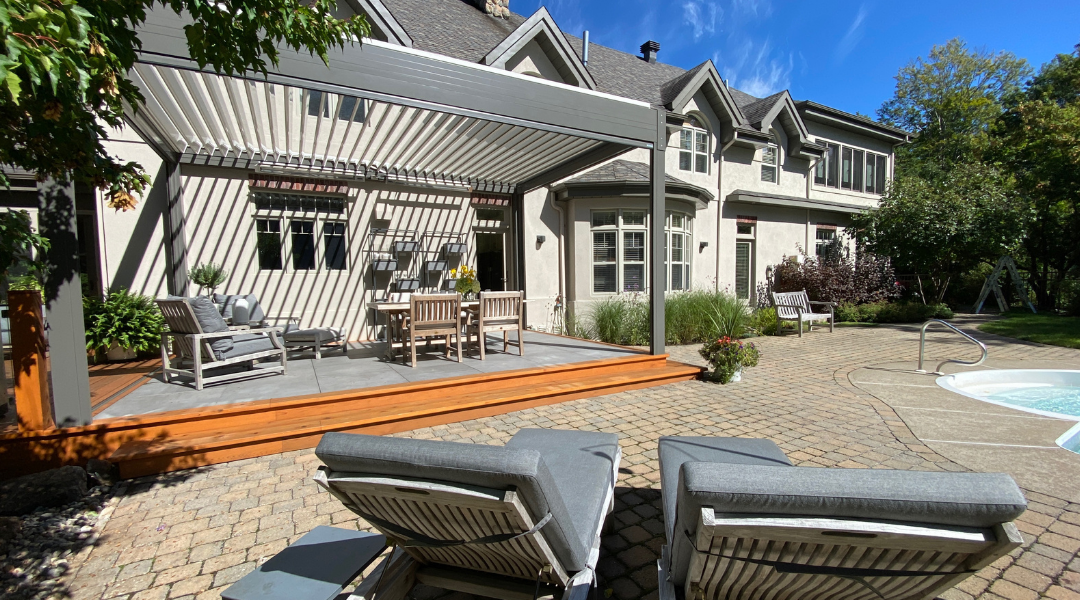
A pergola makes your backyard more comfortable. You can host family gatherings, enjoy your morning coffee, or get relief from the summer sun. Even so, it transforms a patio into an outdoor living space.
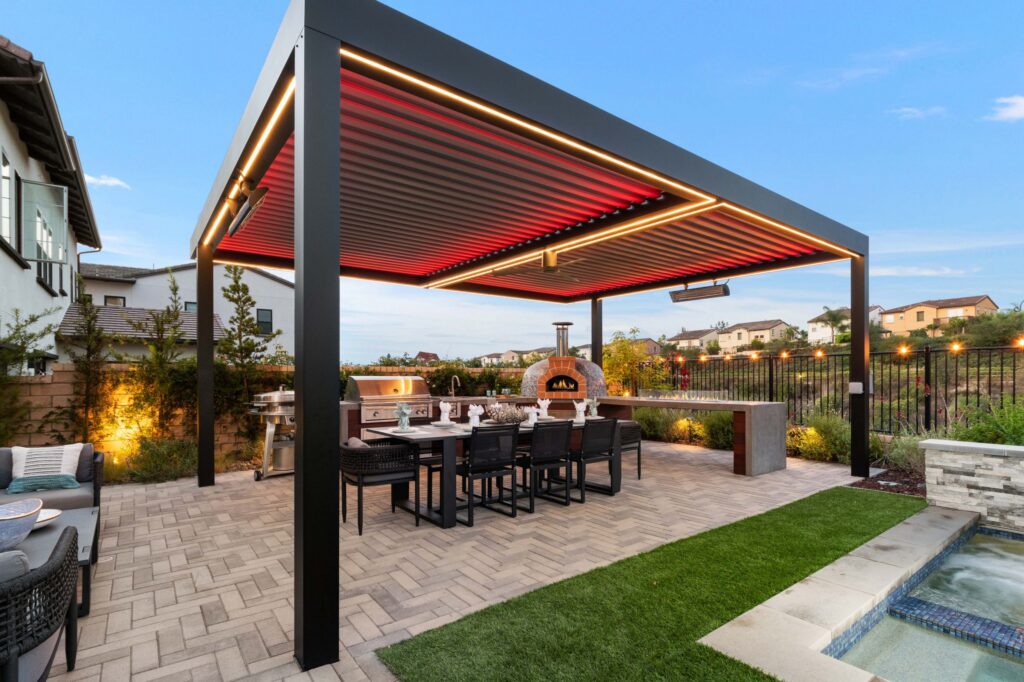
Should you choose a louvered pergola or a traditional pergola? We often hear this question from homeowners across Virginia. The answer depends on how you plan to use the space, your budget, and how much control you want to have.
We break down the differences for you, so you can make the right choice.
What Is a Louvered Pergola?
A louvered pergola comes with adjustable roof slats. These are called louvers and can open and close. Most systems use a motorized mechanism that allows you to control the roof with a remote, a wall switch, or an app.
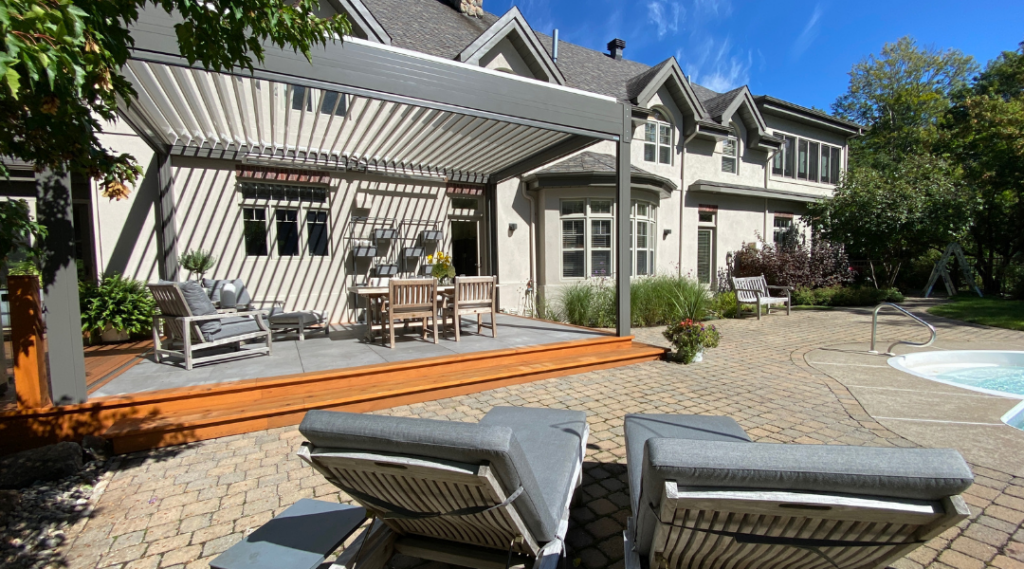
When the louvers are open, sunlight and airflow will pass through. When they’re closed, they create a solid roof that protects you from rain and sunlight.
Still, these aren’t your only options. You have full control over the louvers, so any setting in between is possible. If you want partial shade and airflow, leave the louvers partially open.
Full Control Over Sun and Shade
Virginia’s weather can change quickly. One hour is sunny, and the next you’re dealing with heavy rain. A motorized pergola gives you full flexibility. You can open the roof to enjoy the morning sunlight and close it during the hottest part of the day.
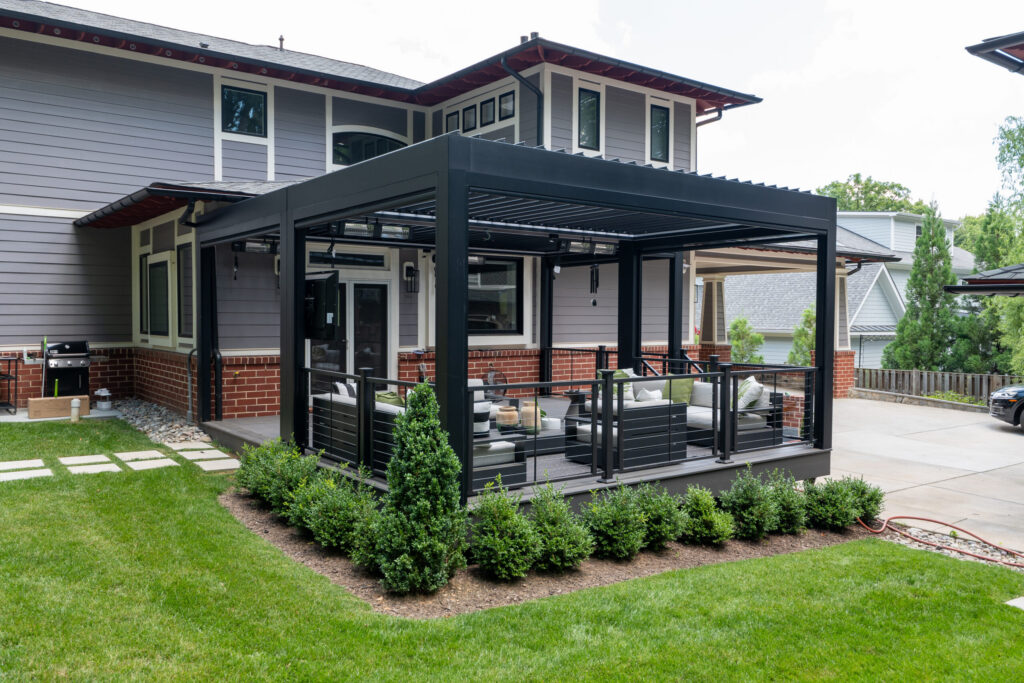
For example, one homeowner from Fairfax wanted to enjoy their west-facing patio. But the harsh afternoon sun made this almost impossible. We suggested a louvered pergola. The louvers can be easily adjusted as the sun moves throughout the day.
Better Rain Protection
If it starts raining, you’ll usually need to head indoors. A traditional pergola won’t protect you from the rain. But a motorized pergola will close and direct the rainwater into gutters and downspouts. This keeps your patio dry, so you can use it during the rain.
Longer Outdoor Season
A louvered pergola creates an outdoor living space. Many homeowners add ceiling fans, lighting, heaters, or retractable screens. Basically, you can use the space from early spring through late fall. This makes your investment more valuable.
Modern Look
Louvered pergolas have a contemporary design. It works well with newer homes and modern outdoor living areas.
What Is a Traditional Pergola?
A traditional pergola has fixed beams or rafters across the top. The roof structure is open, and you get partial shade.
These pergolas can be made from wood, vinyl, aluminum, or composite materials. They are often used to define outdoor living areas without completely covering the space.
They have been popular for decades, as they add visual interest to the yard.
Lower Initial Cost
A traditional pergola has no moving parts, motors, or electrical components. Ultimately, it costs less than louvered systems.
Homeowners who want shade, style, and affordability will find them an excellent option.
Timeless Appearance
Many Virginia homeowners love the classic look. They complement Colonial, Craftsman, farmhouse, and other traditional home styles.
Ideal for Climbing Plants
If you want a pergola covered with wisteria, jasmine, or climbing roses, the traditional one is your first choice. The open roof structure creates a natural frame for climbing plants.
Simpler Maintenance
A traditional pergola has no mechanical components, so it requires less maintenance. But if it is made of wood, you’ll still need to do staining and sealing periodically. Still, there are no motors or moving louvers to service.
Louvered Pergola or Traditional Pergola?
Shade Control
A traditional pergola provides consistent partial shade. The fixed rafters block some of the sunlight, and there is no option for adjustment.
A motorized pergola allows full control. You can adjust the louvers based on the weather, time of day, or season.
Many homes in Fairfax, Ashburn, and Chantilly have west-facing backyards. During July and August, the afternoon sun makes it impossible to enjoy the patio. With a louvered pergola, homeowners can close the louvers and open them in the evening.
Protection From Virginia Weather
Afternoon thunderstorms in the summer are common in Virginia. A traditional pergola doesn’t protect the patio from the rain. If you’re hosting and an unexpected storm begins, you’ll have to move everyone indoors.
With a louvered pergola, you can close the roof when the rain starts. Plus, some systems come with built-in gutters to direct the water away. Some advanced models have moisture sensors and can close automatically when the first raindrops fall.
Year-Round Use
Traditional pergolas are mostly used during spring and fall. This is when the temperatures are comfortable. But louvered pergolas maximize usability.
For example, homeowners in Loudoun County frequently add ceiling fans for summer. Some even add patio heaters for the cooler evenings. So, the space becomes usable outside of the typical outdoor season. The investment delivers more value over time.
Maintenance and Durability
Virginia’s weather is tough on outdoor structures. Traditional pergolas require staining, sealing, or painting to protect them from the elements. A cedar pergola can last for years, but you need to be prepared for ongoing maintenance.
Modern louvered pergolas are built from powder-coated aluminum. It is resistant to rot, insects, and moisture damage. While you will spend less time maintaining the structure, the moving parts still need to be inspected.
Home Style and Neighborhood Character
The architectural style also impacts the final choice. Traditional pergolas often complement Colonial, Craftsman, and farmhouse-style homes. These are common in areas like Vienna, Great Falls, and parts of Alexandria.
Louvered pergolas are popular in newer communities throughout Ashburn, Brambleton, and South Riding. They often complement modern features like outdoor kitchens, televisions, fireplaces, and integrated lighting.
FAQ
If you spend a lot of time outdoors, a louvered pergola is worth it. You can control the sunlight and stay outside in light rain. Plus, many homeowners add screens to make their patio more usable.
A traditional pergola provides partial shade. But you can add more with climbing plants, shade cloths, or canopies. Yet, it still won’t offer the same flexibility as adjustable louvers. Motorized pergolas can be adjusted with a remote control or smartphone app.
If you maintain it properly, a pergola can last for decades. The lifespan depends on materials, maintenance, and exposure to weather. Wood requires regular staining and sealing, while aluminum and vinyl are low-maintenance.
Well-designed outdoor living spaces are attractive to buyers. Basically, permanent structures such as a pergola improve the overall appeal and usability. This helps the home sell faster.
Final Thoughts
A traditional pergola brings timeless charm. But a modern louvered pergola makes the space more usable. The right choice starts with your space, goals, and budget.
If you need help in designing your outdoor space, we’re here for you. Contact us today for a free estimate.